Technology
The technology should fit the building.Not the other way round.
Almost every bad simulator install starts the same way: somebody buys the equipment, then goes looking for somewhere to put it. Ceiling fights the swing. Projector fights the ceiling. Screen fights the walls. Because we draw and build the structure, none of that is a negotiation — ceiling height, throw distance, mounting points, circuit count and sightlines are decided on paper, before a footing is poured.
The four decisions
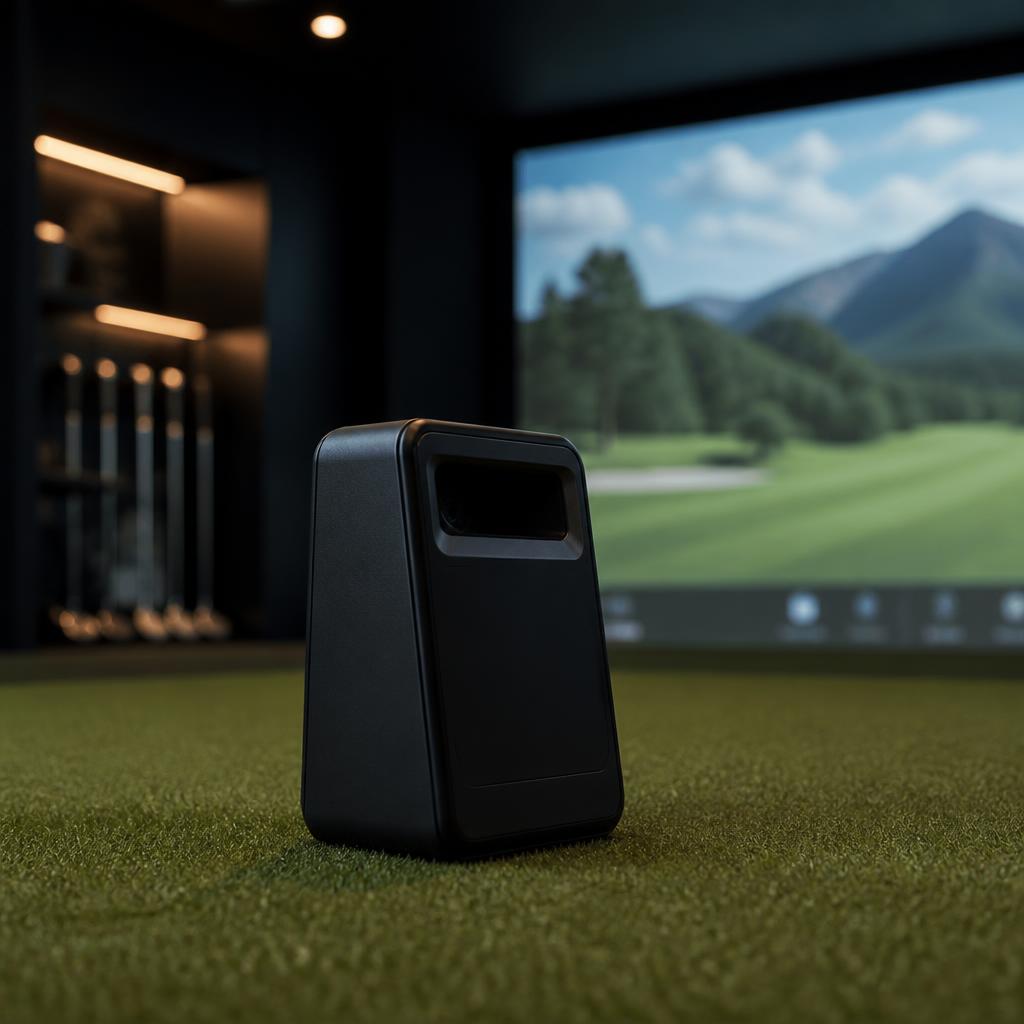
Launch monitor
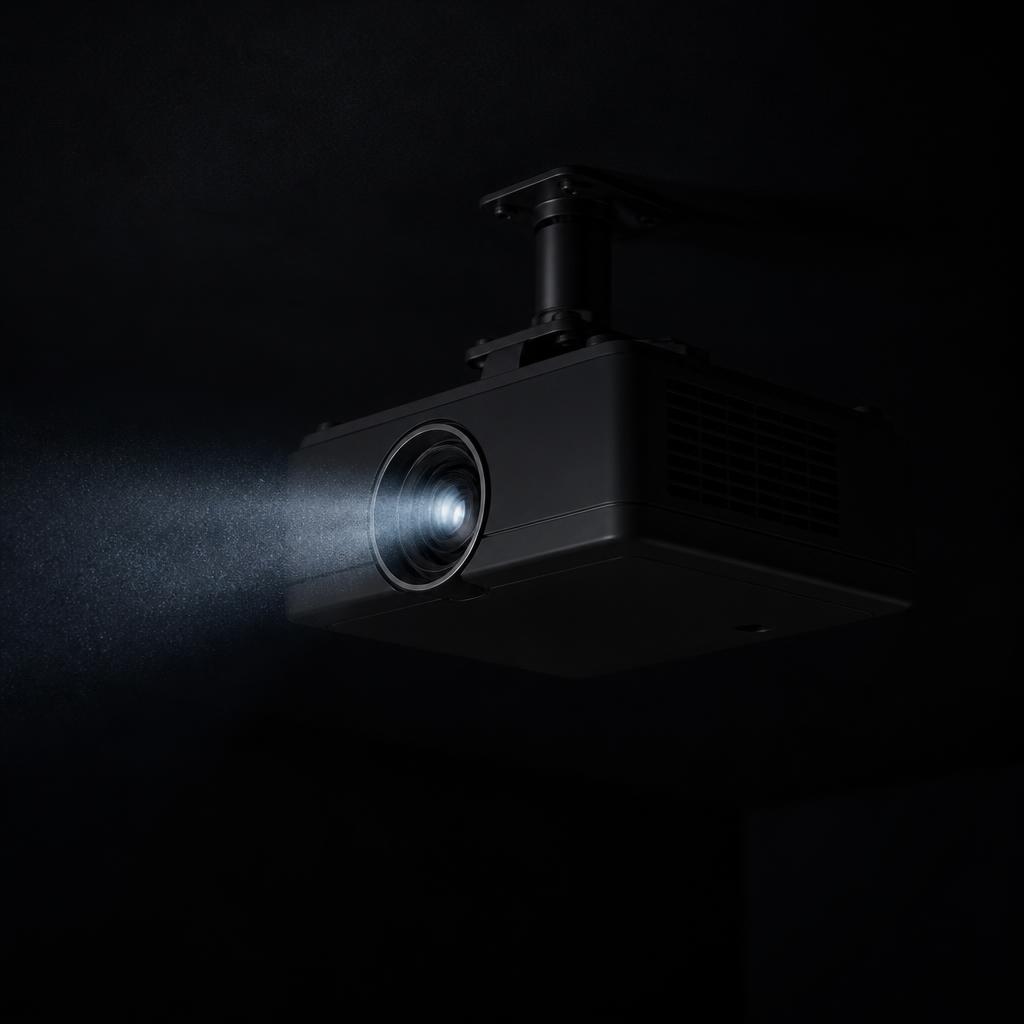
Projection
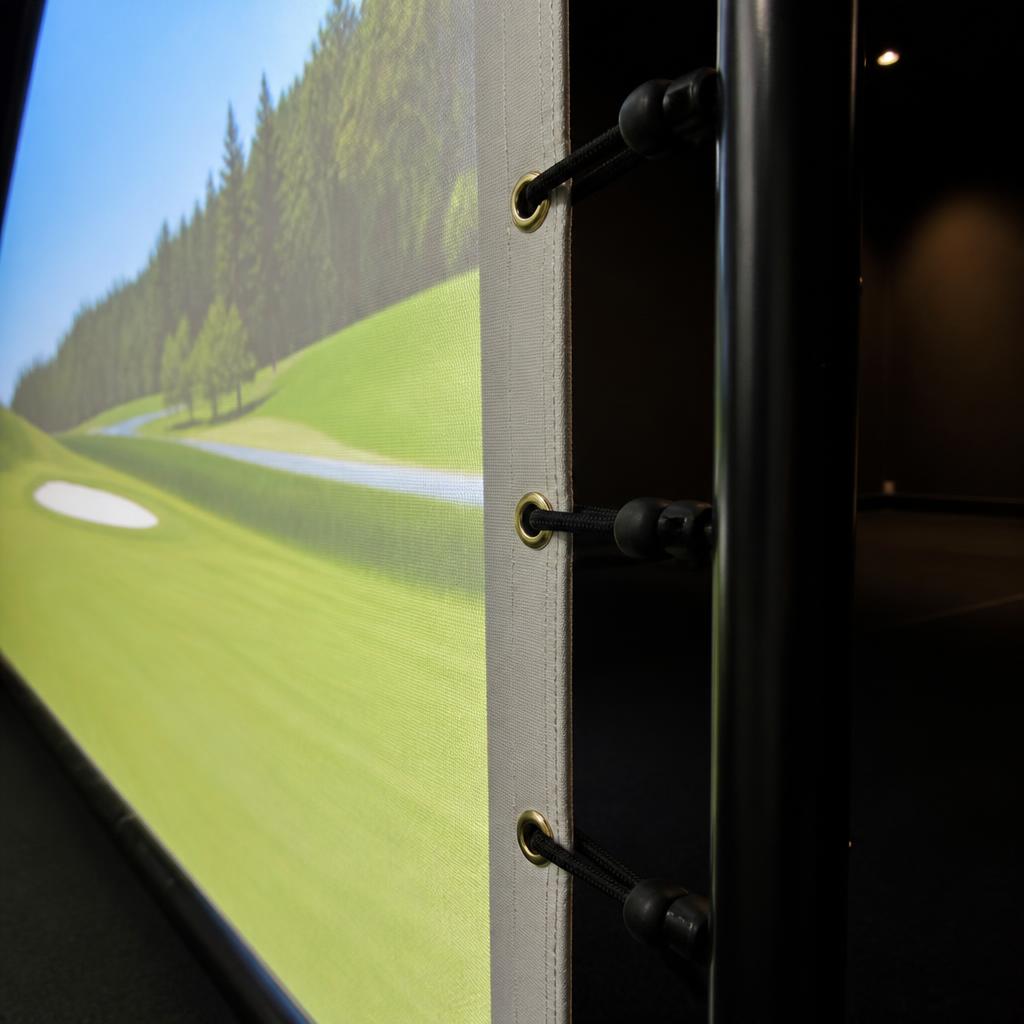
Impact screen
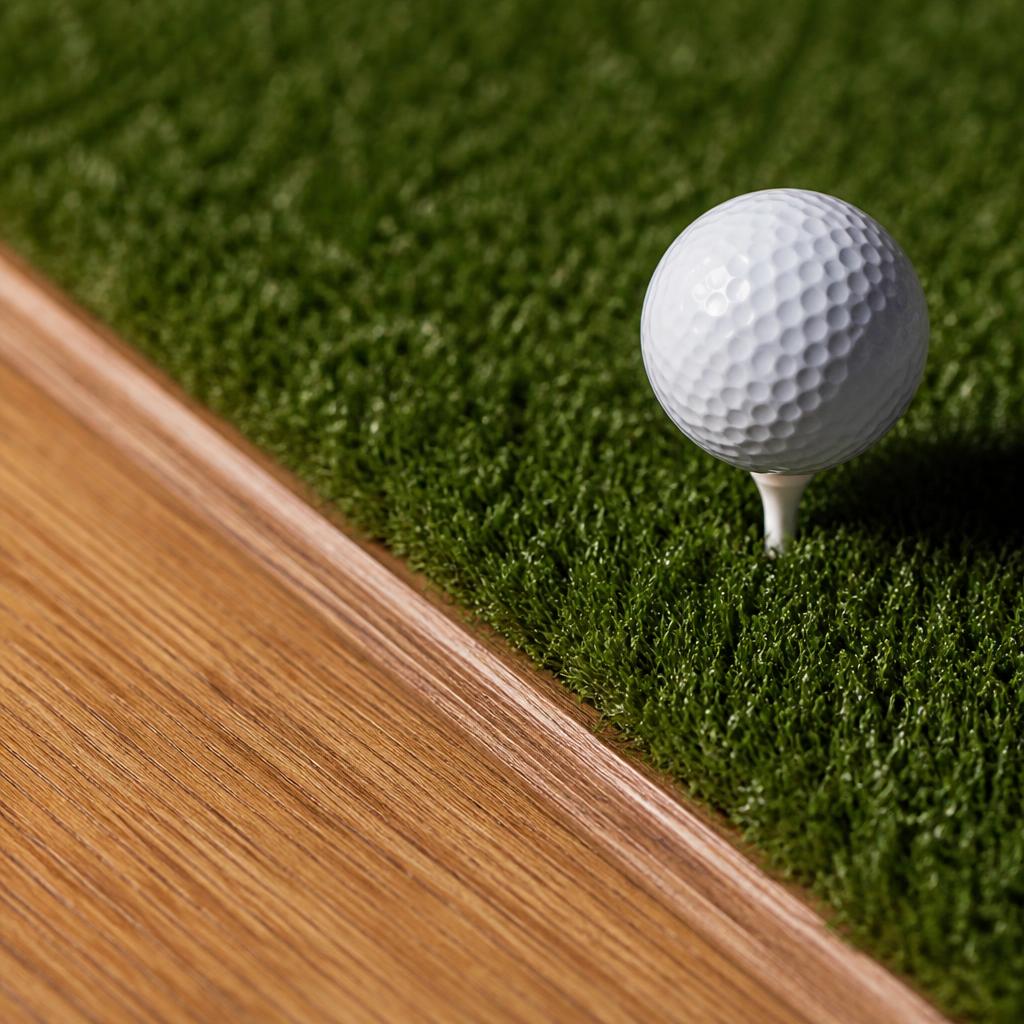
Hitting surface
Launch monitors
Read the ball, not the brochure.
A launch monitor measures either the ball, the club, or both, and it does it with cameras, radar, or a hybrid of the two. What separates them in a real building is not accuracy on a spec sheet — it's what each one demands from the space around it.
Radar units sit behind the golfer and want depth to track the ball downrange before the screen interrupts it. Overhead camera systems want height and a rigidly mounted, vibration-free ceiling plane. Floor-based photometric units want clean, consistent light and a precise relationship to the hitting position.
We pick the unit that matches how you actually play — practice fidelity versus round-play enjoyment versus club fitting — and then the building gets designed to give it what it wants.
Radar vs camera
01
Radar
Doppler tracking of the ball in flight. Genuinely excellent full flight data, forgiving about lighting, and largely indifferent to what the ball looks like.
The cost is length. Radar wants meaningful distance behind the golfer and in front of the ball, which is why radar in a short room disappoints people who paid a lot of money for it. In a purpose-built bay, we simply make the building long enough.
02
Camera / photometric
High-speed images captured at and immediately after impact, with flight modelled from measured launch conditions. Very strong club data, very compact, very happy in a shorter footprint.
The cost is discipline. Camera systems care about lighting consistency, marked or premium balls in some cases, and exact mounting. All three are trivial when the electrical, lighting and structure are being drawn at the same time as the tee position.
Projection
Geometry first. Lumens second.
Projector selection is mostly a geometry problem pretending to be a shopping problem. Throw ratio, mounting distance, lens shift and image height have to resolve into a picture that fills the screen, doesn't key-stone, and doesn't get interrupted by a swinging driver or a standing golfer.
Short-throw and ultra-short-throw optics solve the shadow problem by getting the light source out of the swing path. Ceiling height decides how cleanly that works. At ten feet we can mount it properly; at eight feet, which is what most houses offer, every option is a compromise.
We recess and enclose the projector so it reads as part of the black ceiling plane rather than as equipment bolted to it, and we run conduit so the next one goes in without opening a wall.
Screens, turf, light and sound
03
Impact screens
A screen has three jobs: take a driver strike for years, hold a clean image, and stay quiet. Tension is what delivers all three. A properly framed and tensioned screen with a bungee or spring perimeter absorbs impact, minimises ripple, and dramatically reduces the slap you hear from the house.
We frame the screen into the structure, leave a controlled air gap and baffle behind it, and detail the surround so you see a picture rather than a curtain.
04
Hitting surface and turf
The surface is what your body actually experiences. Fibre length, backing, and above all the foam and subfloor underneath decide whether a fat shot feels like grass or like concrete — and whether you can still play after an hour.
We build level transitions between the hitting strip and the surrounding floor, allow for two-handed households, and design the tee area so a worn hitting strip can be replaced without lifting the entire floor.
05
Lighting
Lighting is the most underrated technical decision in the building. It has to be bright enough to live in, controlled enough that nothing spills onto the screen, and consistent enough that a camera-based system reads impact the same way every time.
Our default is layered: indirect ambient over the hitting zone, tightly controlled architectural fixtures for the lounge, warm 2700K, and a scene control that turns the room from bright to cinema with one button.
06
Acoustics
A golf building is a hard box full of loud impacts. Untreated, it sounds like a gymnasium and the neighbours notice. Treated, it sounds like a room in a good house.
Insulation in the cavity, a resilient ceiling assembly, absorption behind the screen and on the first reflection points, and a solid door. Because it's a detached building, none of the impact energy is travelling through your bedroom floor.
AV, control and software
07
AV and control
A second display for sport, in-ceiling audio zoned so the bar isn't deafened by the screen, a hardwired network run in the same trench as the power, and a rack location that is ventilated and reachable.
The measure of success is that the building turns on with one press and nobody has to know where anything is plugged in.
08
Software
Course play, practice ranges, skills games, club fitting, on-course simulation, multiplayer. Most launch monitors ship with their own package and also open to third-party platforms — which matters more than people expect, because the software is what your family will judge the building on.
We set it up, calibrate it, and hand it over working. Subscription costs get named up front rather than discovered in February.
09
Left- and right-handed players
A two-hander household is a layout decision, not an accessory. Hitting zone width, turf layout, screen centring, camera placement and where the seating goes all change.
Tell us at Space Check. On paper it's free.
10
Built to be upgraded
The launch monitor you buy will be superseded. The building won't. So we run spare conduit, add blocking where a future mount could land, size the subpanel with headroom, and keep the ceiling access sane.
Systems we work with
Listed as systems we specify and integrate. No logos, no partnerships implied, no dealership, no incentive to sell you the wrong one. If the right answer for your building is the cheapest unit on that list, that's the one we'll spec.
Questions
The things people actually ask.
Pick the building first.The gear gets easy.
Send us the yard and what you want to do in it. We'll come back with a building size, a ceiling height, and the technology that belongs in it.